
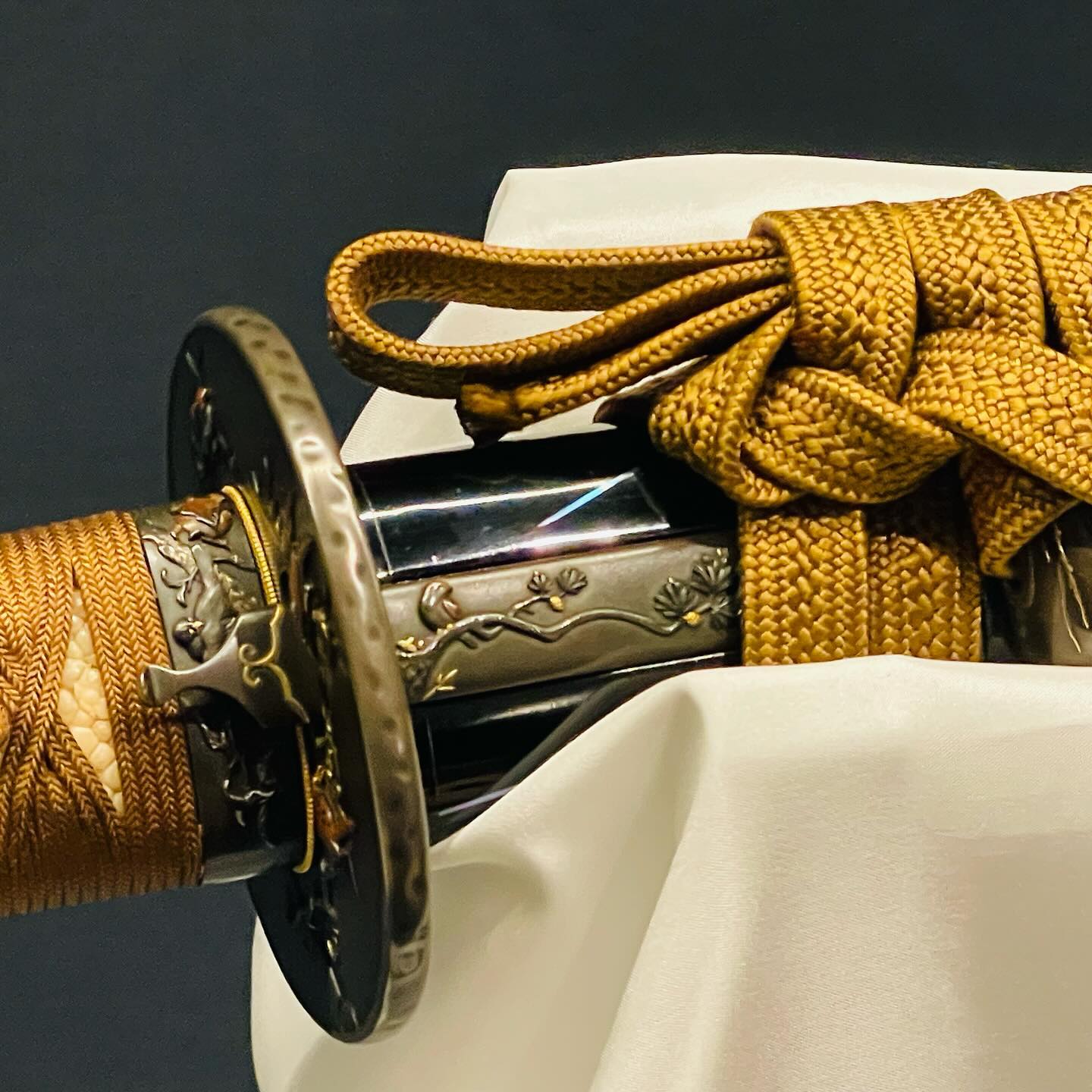

Japanese swordsmithing represents one of the most sophisticated traditions of metallurgical craftsmanship in world history. The Japanese sword (nihontō) is not merely a weapon but also a cultural artefact embodying technological innovation, aesthetic principles, religious symbolism, and social status. Over more than two millennia, Japanese smiths developed highly specialised forging techniques that produced blades renowned for their sharpness, resilience, and beauty. The evolution of these techniques reflects broader changes in Japanese society, warfare, and technological exchange with continental Asia. One of the most distinctive aspects of Japanese sword production is the use of tamahagane (“jewel steel”), produced from iron-rich sand rather than mined iron ore. The primary raw material, known as satetsu, was collected from riverbeds and coastal deposits, particularly in western Japan. Although abundant, this sand contained numerous impurities and produced steel of highly variable carbon content, presenting significant challenges for swordsmiths.
To transform satetsu into usable steel, Japanese metallurgists employed a traditional clay furnace known as a tatara. During a smelting process lasting several days, layers of iron sand and charcoal were added continuously. The charcoal provided both heat and carbon, allowing the iron to absorb varying amounts of carbon while many unwanted impurities were removed as slag. At the conclusion of the process, the furnace was broken open and the resulting steel bloom was sorted according to quality and carbon content.
The refinement of tamahagane continued during forging. Swordsmiths repeatedly heated, folded, and forge-welded the steel, a process that helped distribute carbon more evenly and expelled additional slag and non-metallic inclusions. Contrary to popular belief, folding did not create the blade’s strength directly; rather, it improved the consistency and purity of the material available to the smith. Through successive welding and folding cycles, the steel became more homogeneous while retaining sufficient carbon to produce a hard cutting edge.
These sophisticated metallurgical techniques enabled Japanese swordsmiths to overcome the limitations of their raw materials and create blades of remarkable quality. Modern metallographic studies have demonstrated that the combination of tatara smelting, selective sorting of steel, and repeated forge welding produced a material well suited to the demanding requirements of sword manufacture.
From the Bronze Age to Early Iron Technology
Yayoi Period (c. 300 BCE–300 CE)
The earliest metal weapons in Japan appeared during the Yayoi period, when bronze and iron technologies were introduced from the Korean Peninsula and China. Bronze ceremonial swords (dōken) were cast rather than forged and were often used for ritual purposes rather than combat. At the same time, imported iron tools and weapons began to supplement bronze artefacts.
Archaeological evidence suggests that early Japanese craftsmen gradually acquired the skills necessary for forging iron locally. However, sword production remained relatively simple compared with later developments.
Kofun Period (c. 300–538 CE)
During the Kofun period, iron weapons became widespread. Straight double-edged swords known as chokutō reflected strong Chinese and Korean influence. These blades were forged from relatively homogeneous iron and lacked the complex composite structures characteristic of later Japanese swords.
The increasing militarisation of Japanese society encouraged improvements in metalworking techniques, including more effective forging and heat-treatment methods.
Development of Classical Swordsmithing
Asuka and Nara Periods (538–794)
During the Asuka and Nara periods, contacts with Tang China accelerated technological development. Japanese smiths adopted advanced forging techniques and increasingly produced locally made weapons rather than relying on imports.
The earliest evidence of differential hardening—the process that would eventually produce the distinctive hamon (temper line)—appears during this period. Differential hardening involves coating parts of the blade with clay before quenching, allowing the cutting edge to cool more rapidly than the spine.
Heian Period (794–1185)
The Heian period witnessed the emergence of the curved Japanese sword. Changes in cavalry warfare encouraged the development of the tachi, a long curved blade optimised for mounted combat.
Swordsmiths refined the use of tamahagane, a high-carbon steel produced in traditional bloomery furnaces known as tatara. The steel was repeatedly folded and forge-welded, reducing impurities while creating a distinctive grain pattern (hada). During this period, many of the defining characteristics of the Japanese sword first appeared.
The legendary smith Amakuni is traditionally associated with these innovations, although historical evidence for his existence remains limited.
The Golden Age of the Japanese Sword
Kamakura Period (1185–1333)
Many historians regard the Kamakura period as the golden age of Japanese swordsmithing. The rise of the samurai class created substantial demand for superior weapons.
Master smiths such as Masamune developed sophisticated composite constructions combining steels of different carbon content. Techniques such as kobuse and sanmai construction enabled blades to possess both exceptional hardness and flexibility.
Scientific examination of surviving Kamakura swords reveals highly controlled microstructures composed of martensite, pearlite, and ferrite. These structures resulted from precise control of forging temperatures and quenching processes.
Muromachi Period (1336–1573)
Continuous warfare during the Muromachi period increased demand for weapons. Sword production became more standardised and efficient, while maintaining high technical standards.
The shorter uchigatana, worn edge-up through the belt, gradually replaced the tachi. This weapon eventually evolved into the katana familiar today.
Early Modern Developments
Azuchi-Momoyama Period (1573–1603)
The introduction of firearms by Portuguese traders in the sixteenth century transformed Japanese warfare. Nevertheless, swords remained important as sidearms and symbols of warrior status.
Swordsmiths adapted to changing military requirements, producing robust blades capable of withstanding intense battlefield conditions.
Edo Period (1603–1868)
The prolonged peace of the Tokugawa shogunate reduced the practical military role of swords. Consequently, artistic and aesthetic considerations assumed greater importance.
Swordsmiths increasingly emphasised decorative temper patterns, elaborate mountings, and highly refined polishing techniques. Schools of sword appraisal and connoisseurship flourished.
The metallurgical sophistication of Edo-period blades remained impressive, although many scholars distinguish these works from the battlefield-oriented masterpieces of the Kamakura era.
Modern and Contemporary Swordsmithing
Meiji Period (1868–1912)
The Meiji Restoration brought dramatic social change. The Haitōrei Edict of 1876 prohibited the public wearing of swords, leading to a severe decline in traditional sword production.
Many swordsmiths abandoned their profession or redirected their skills towards industrial manufacture.
Taishō and Shōwa Periods (1912–1989)
A revival of military nationalism in the early twentieth century led to renewed sword production. However, many wartime swords were manufactured using industrial methods and differed significantly from traditional nihontō.
Following the Second World War, Allied occupation authorities initially prohibited sword manufacture. Subsequent exemptions recognised traditionally forged swords as cultural artefacts rather than weapons.
Heisei and Reiwa Periods (1989–Present)
Today, Japanese swordsmithing survives as an important intangible cultural tradition. Licensed smiths continue to produce swords using traditional tatara steel and historical forging methods. Modern metallurgical research has further enhanced understanding of historical techniques through microscopy, X-ray diffraction, and materials analysis.
Contemporary swords are primarily produced as works of art, objects of cultural preservation, and items for martial arts practice (ie: Iaido, Kendo, Kenjutsu) rather than as military weapons.
Selected references for the avid reader (ie: all you lovely nerds out there)
Farris, W. W. (1998). Sacred Texts and Buried Treasures: Issues in the Historical Archaeology of Ancient Japan. University of Hawai’i Press.
Kapp, L., Kapp, H., & Yoshihara, Y. (1987). The Craft of the Japanese Sword. Kodansha International.
Matsuo, M., Inoue, T., & Sugiyama, S. (2005). “Metallurgical Study of Traditional Japanese Swords.” Materials Science Research International, 11(1), 16–23.
Tylecote, R. F. (1992). A History of Metallurgy (2nd ed.). Institute of Materials.
Williams, I. (2008). “The Sword and the Japanese Warrior Tradition.” Arms & Armour, 5(2), 101–125.
Yoshihara, Y., Kapp, L., & Kapp, H. (2012). Modern Japanese Swords and Swordsmiths. Kodansha International.
Sato, K. (1995). The Japanese Sword: A Comprehensive Guide. Kodansha International.
Nagayama, K. (1997). The Connoisseur’s Book of Japanese Swords. Kodansha International.